They Hired Me.
A song about four AI assistants, the person running messages between them, and the second brain that was supposed to fix it, but didn’t, and how we think a second brain for agents should actually work. Below: how it was made, shot by shot, including what we got wrong.
A film by Yogev Ben-Tov · 2026
- Film
- 2:29
- Tempo
- 130 BPM
- Lyric drafts
- 20
- Stills
- 49
Why we made it.
Most people building a second brain for their agents ask those same agents to keep markdown files up to date, and trust that the files are right. Team0 is a second brain that builds and maintains itself, from your email, calendar, meetings, agent conversations and the other tools you connect. Nobody has to keep it up to date.
One situation everyone already lives through.
Four assistants, each sharp on its own. None of them knows what the others were told. So you carry it.
The song stays inside that feeling: the relay, the files that were meant to fix it, and the upkeep they turned into. Most lines are things people really say to agents and hear back.
From the song
“Could you share a bit more context?”

Every shot was a still first.
No video was made until the whole film existed as frames. Here they are, in film order, with the line each one plays under.

0:00Four bells, before the music

0:02Four AI assistants, and I’m still the help

0:06Claude

0:07ChatGPT

0:08OpenClaw

0:09and Town
0:10I’m running around, around, around

0:16Claude, check the pitch. Could you share a bit more context?
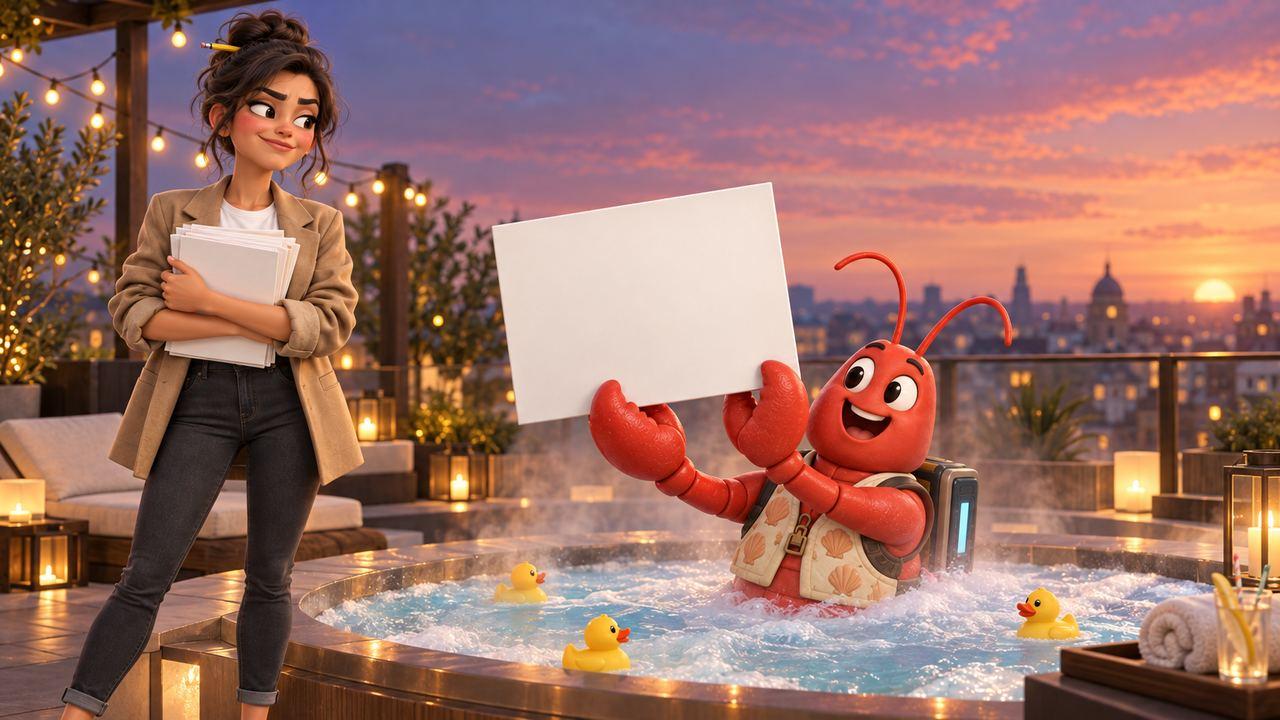
0:20OpenClaw, the deck. What did the other one say?

0:23Four sharp minds who never meet

0:26Tell this one what that one said
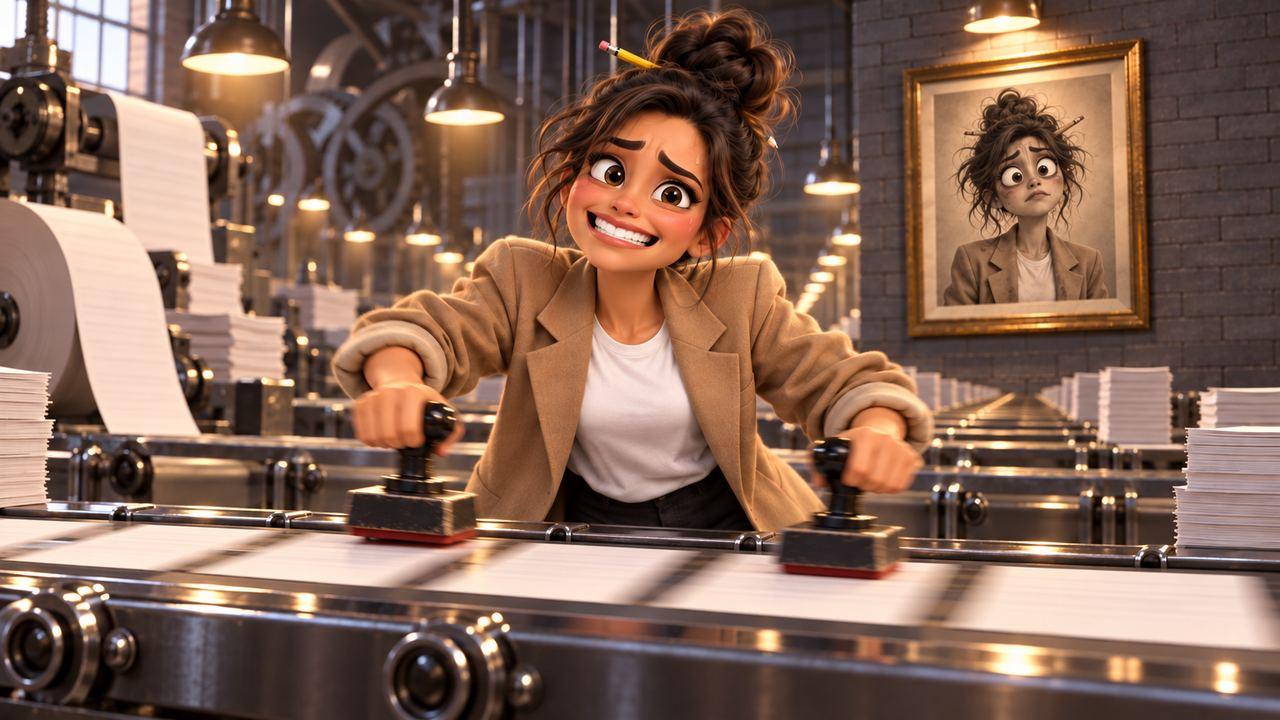
0:31Copy, paste, explain, repeat
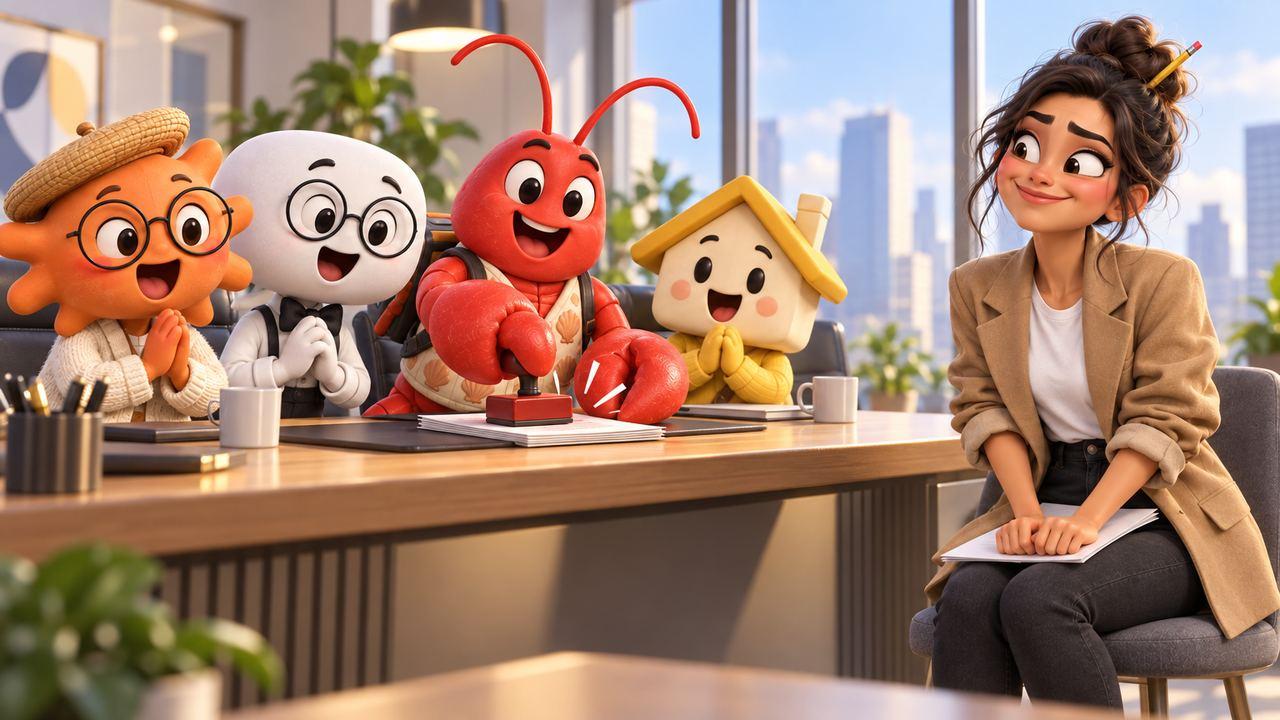
0:38I hired a team, they hired me
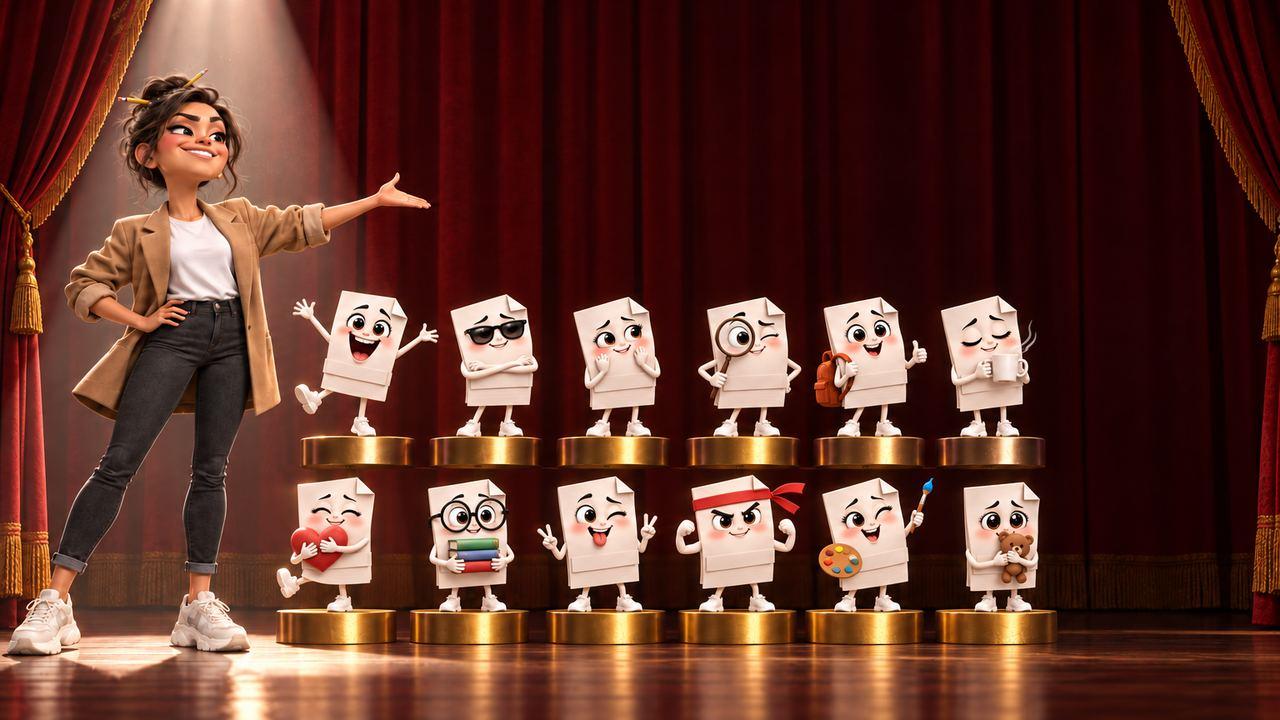
0:45So I built a second brain! Behold!
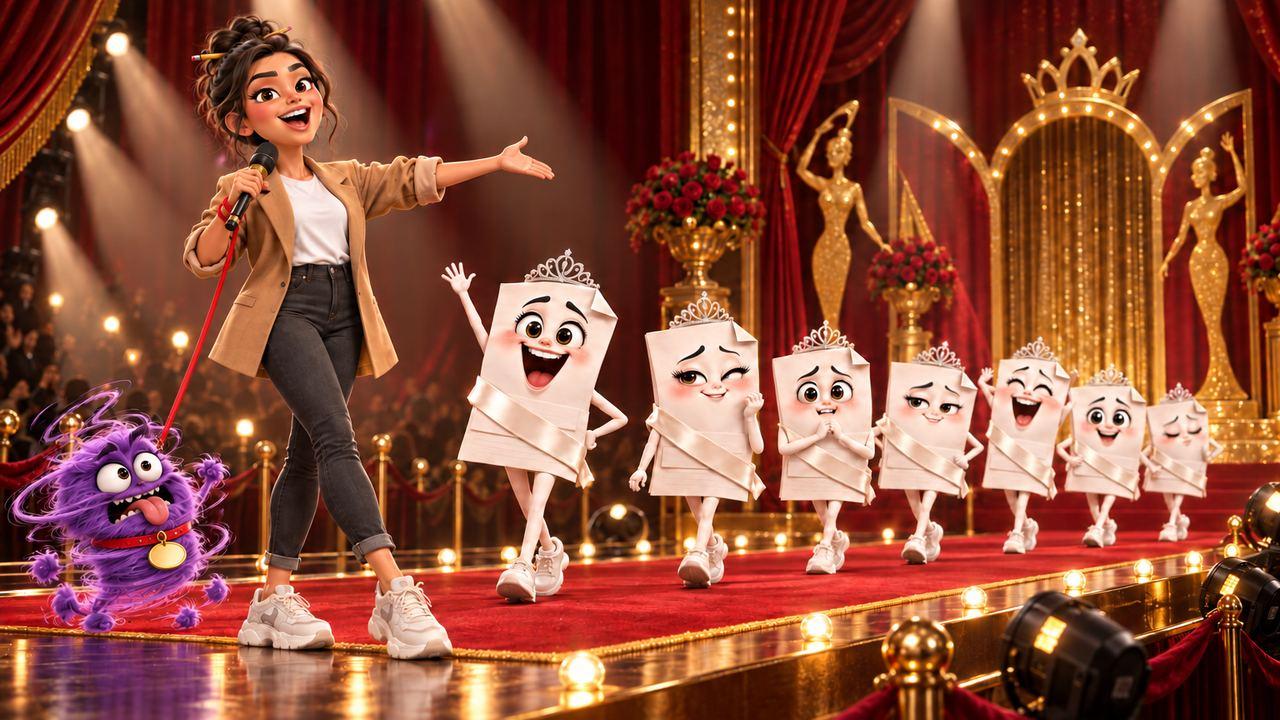
0:49People, projects, tasks, about-me

0:55Even my chaos has a directory

0:59My one source of truth, forever in sync!
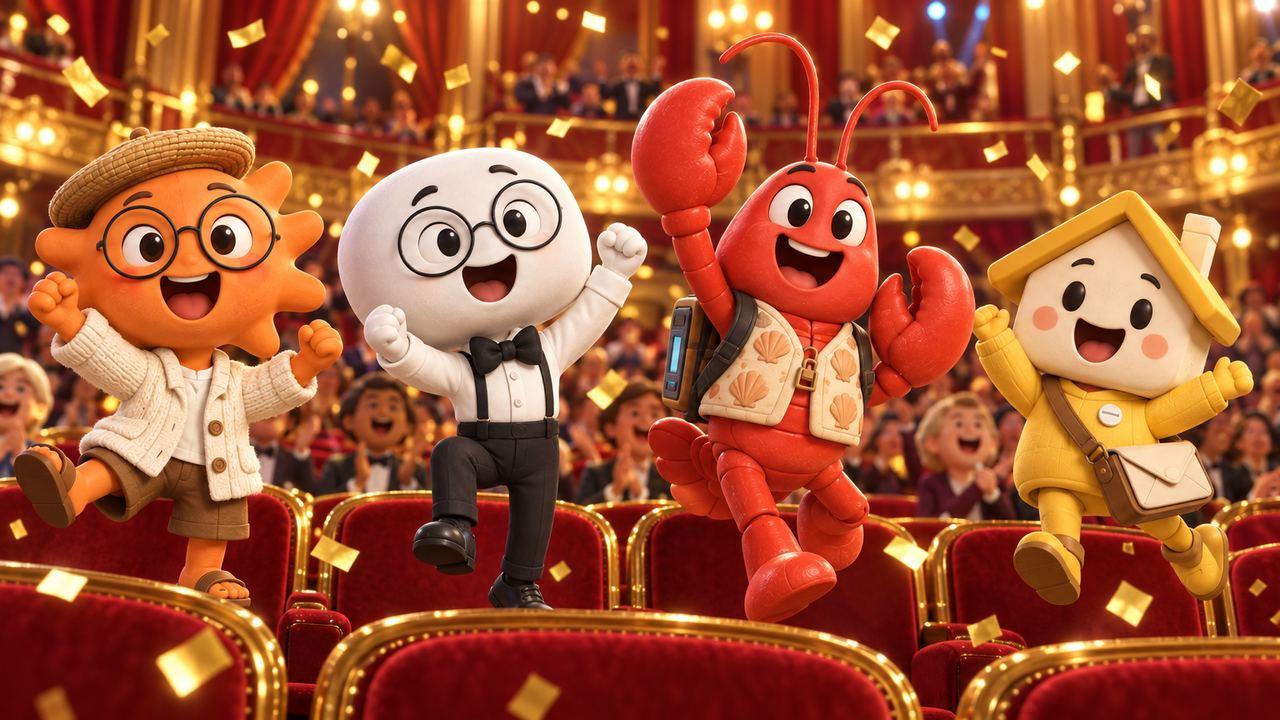
1:04You’re absolutely right!

1:06I’d like to thank...

An email lands

1:11Oh. One more thing.
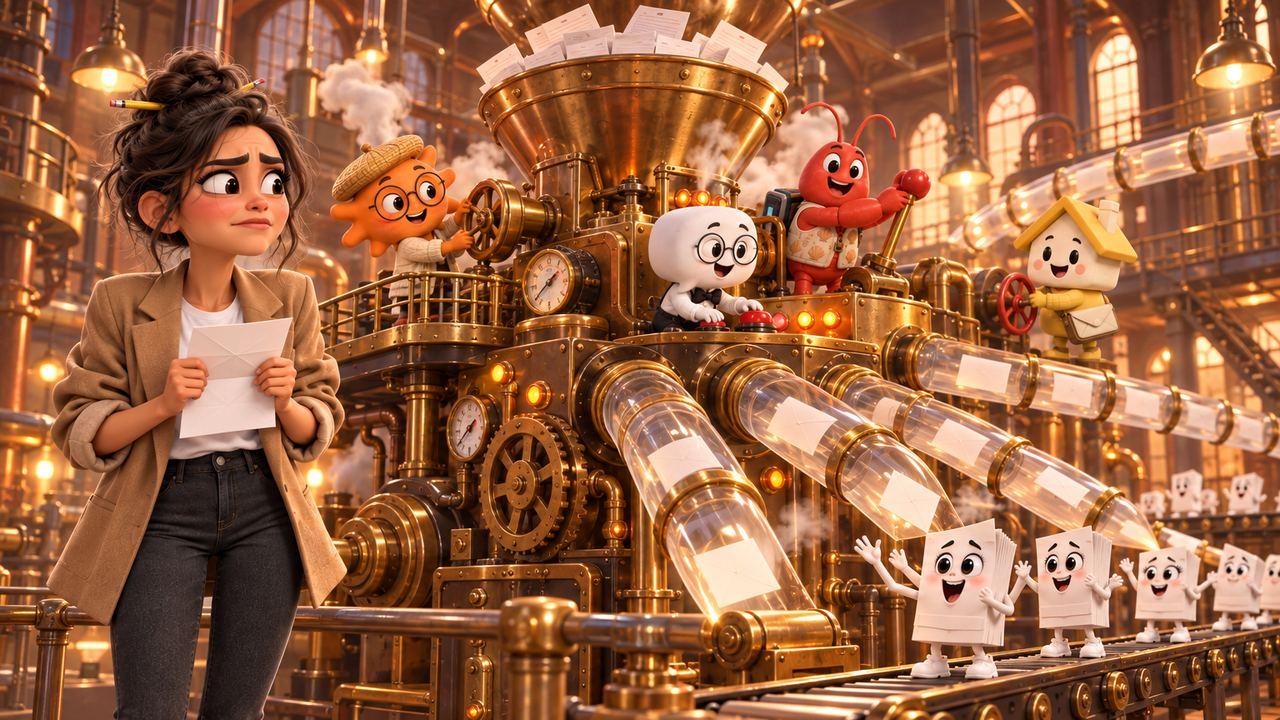
1:12Update the notes, rework the pitch

1:14Re-read, re-write, re-paste, re-sync

1:16Compacting conversation... Not that part!

1:19Could you share a bit more context?

1:21I built a second brain. It gave me homework.

1:28Mine. Come on!
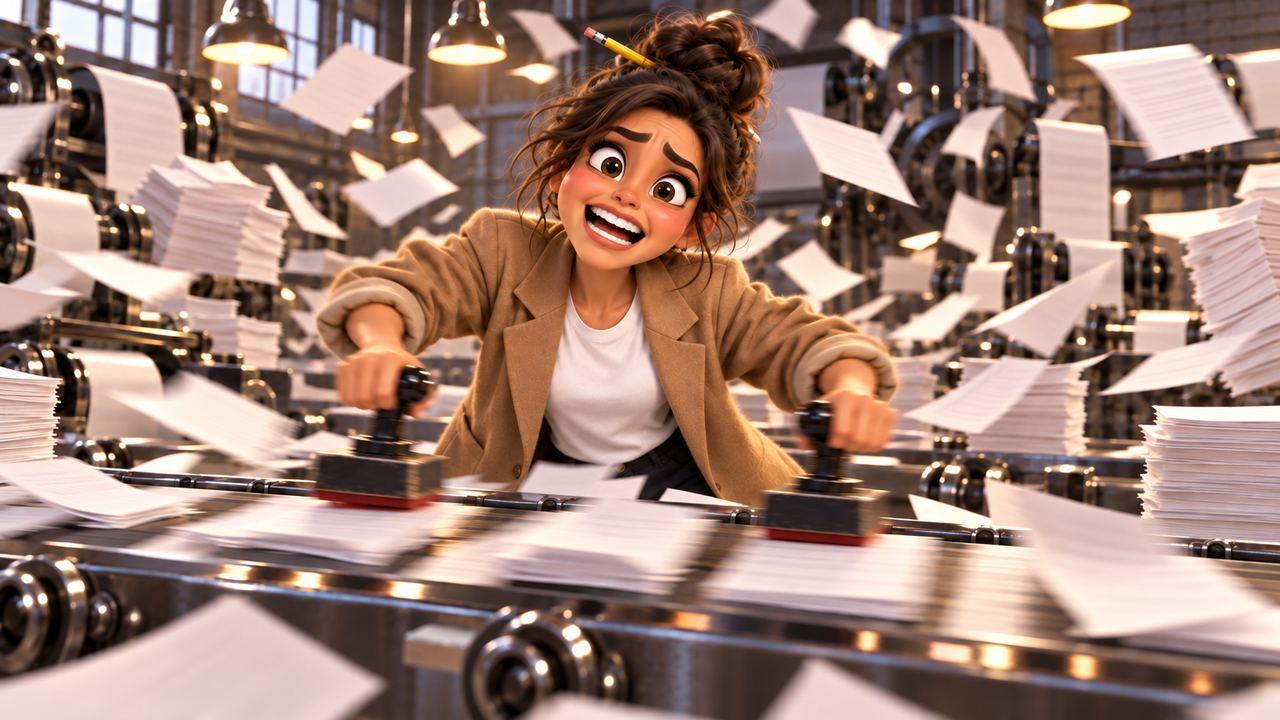
1:30Copy, paste, explain, repeat
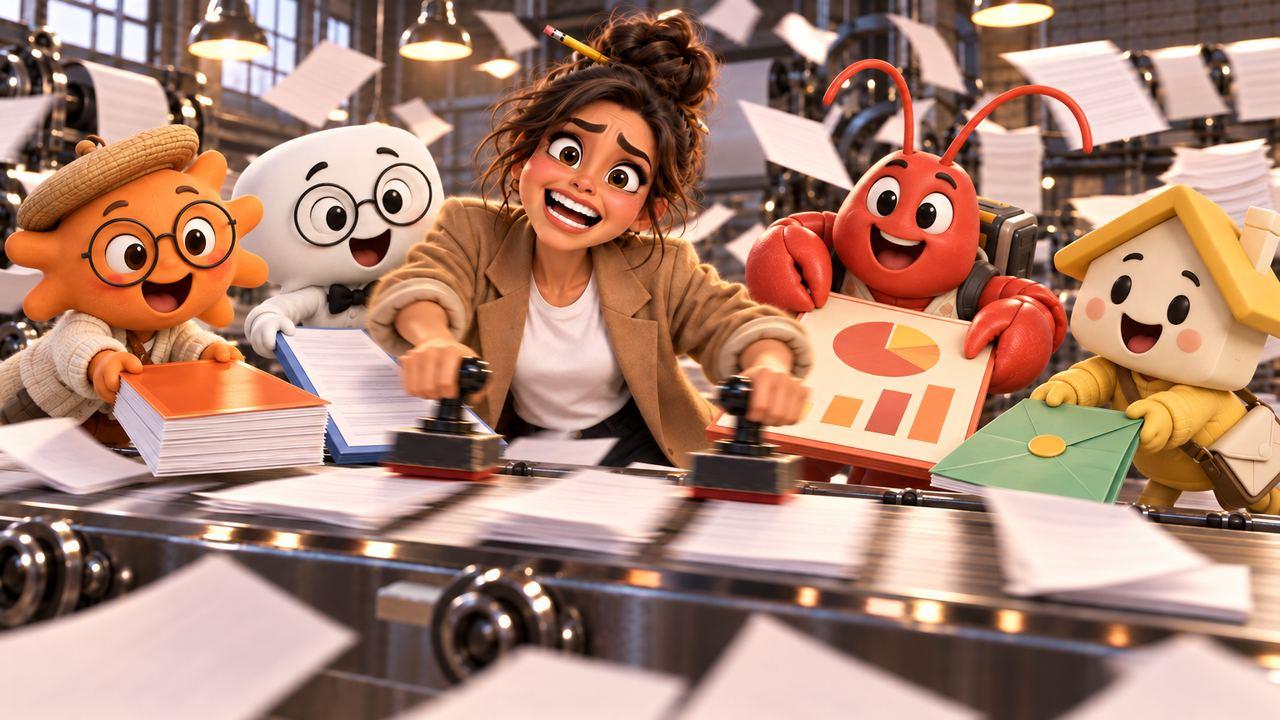
1:34Four assistants, one employee

The turn: STOP!
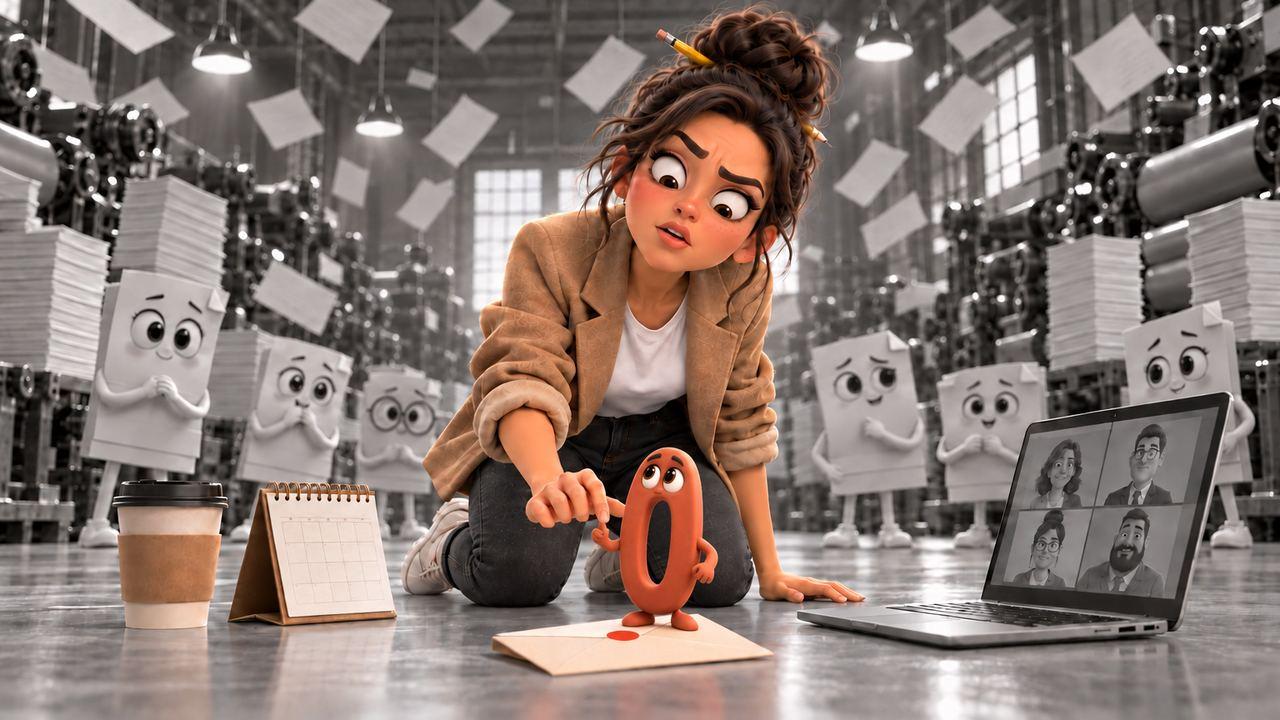
Her real email, calendar and meeting
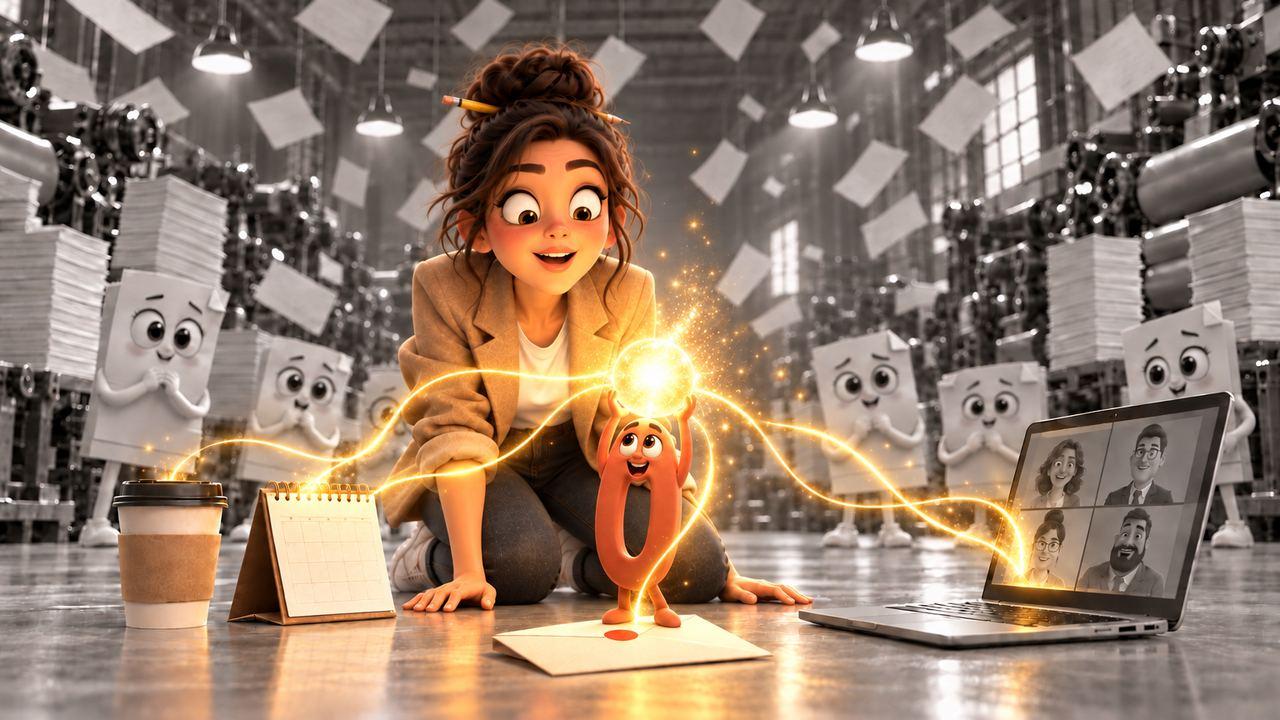
Gold rises out of her real work

Colour floods back

1:51Claude, the pitch. Let me start from the...

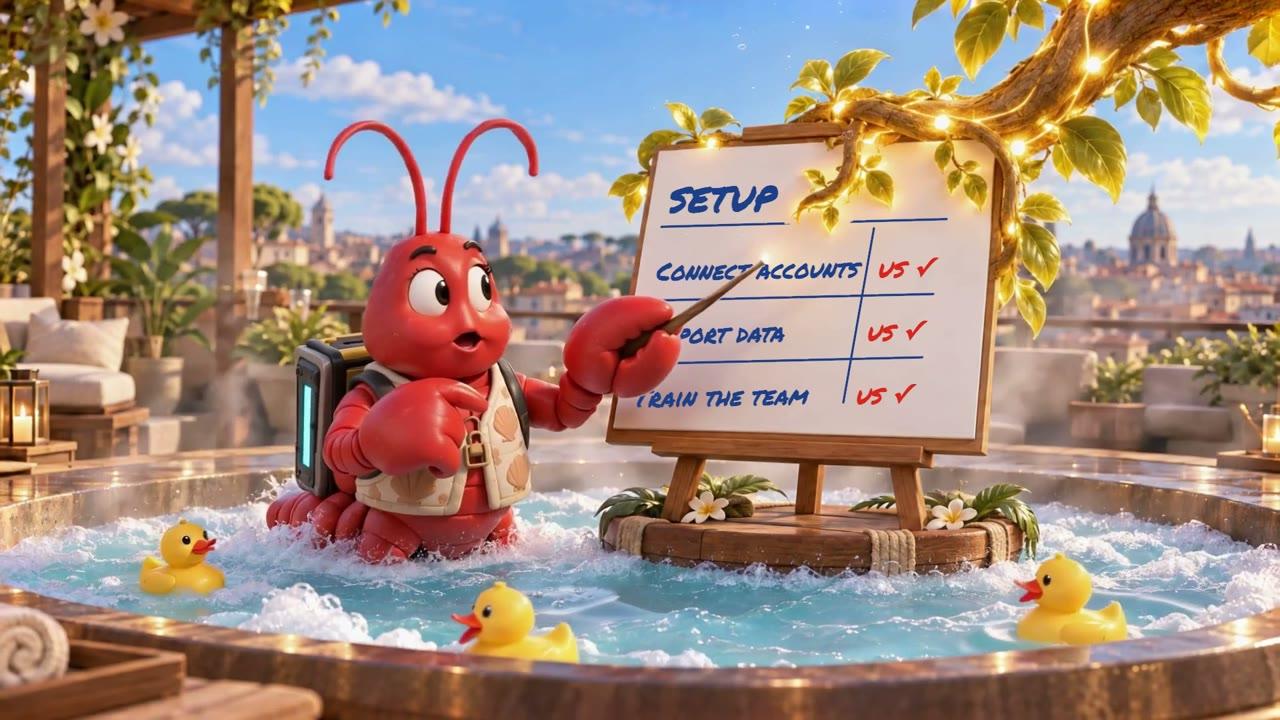
1:53They asked about setup.

1:55Lead with setup.

1:57Setup first?

1:57Wow, and you just got here

1:59Four assistants, and they get me

2:03I hired a team, and they get me

2:07Four assistants, and they get me

2:11I’ve got another idea... Go on.

2:13Go.

The rocket dives into the tree

Ingest: every source flows in
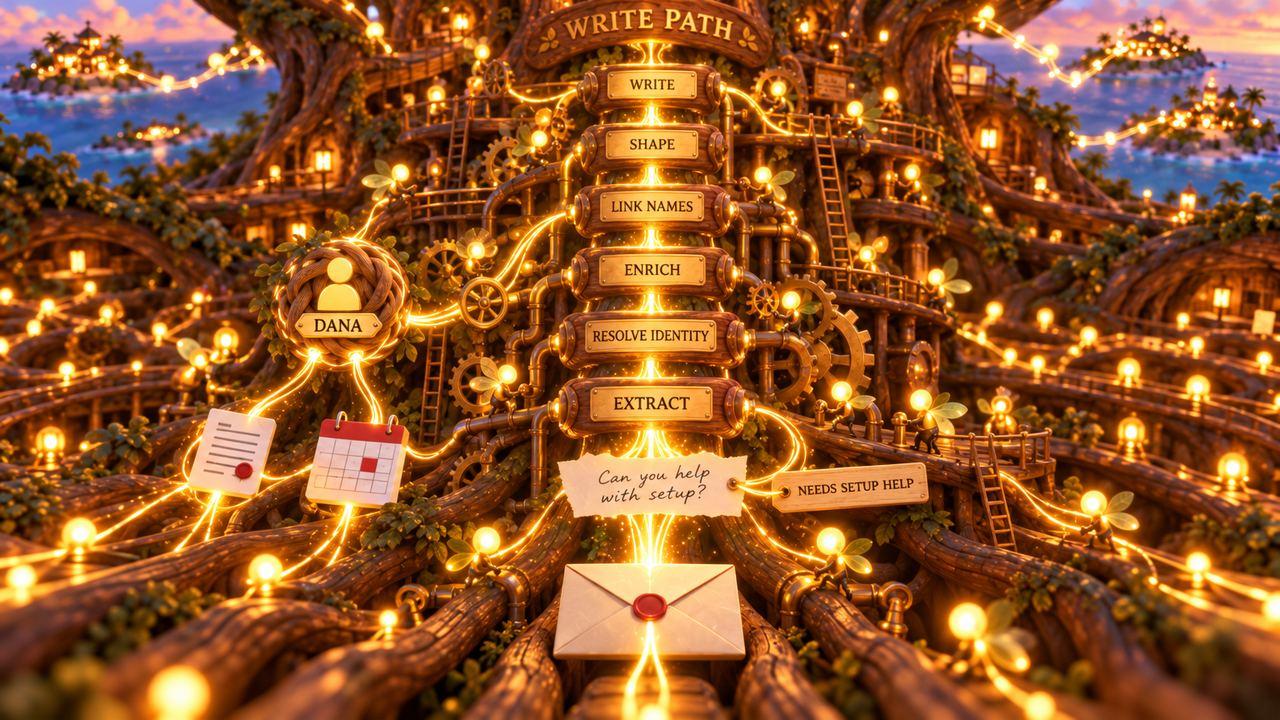
The write path: an email becomes a fact

The world model: the ring of checks

The governed door: an agent reads

Back in the hammock
Never the screen. Always the feeling.
The rule for every line: skip the literal thing and show the most physical version of how it feels. Screens stay rare.
The line
“I’m the messenger on repeat”
- The literal
- A person copying text between chat windows
- On screen
- A pigeon flying notes between four islands
The line
“Compacting conversation”
- The literal
- A progress message in a terminal
- On screen
- A car crusher, and a dive to save one line
The line
“People, projects, tasks, about-me”
- The literal
- A folder of files
- On screen
- A beauty pageant of files in sashes
The line
“It gave me homework”
- The literal
- A to-do list
- On screen
- Her own files as strict teachers
Every frame, checked at full size.
A small preview hides a lot. This one looked fine on a contact sheet.

Eight steps, in order.
One director and two AI agents: Claude made and edited, running every image, video and sound model on Scenario; Codex reviewed every frame and plan.
- 01
One situation everyone lives through
Four assistants, and you are the one carrying context between them. Then stop changing the idea.
- 02
Words from inside the culture
Real phrases people say to agents and hear back. Twenty drafts until it was a song, not a sales deck.
- 03
The song in Suno
Free plan to test the words, a paid plan for the master, so the song is ours. Stems for the edit.
- 04
Map every word
Beats, word timings and who sings each line, measured from the audio.
- 05
A still for every shot
The whole film as frames first, checked at full size, before any money goes to motion.
- 06
A storyboard, line by line
Every sung line beside its frame, with the motion and the effects written down.
- 07
A free rough cut
The whole song cut from stills. Notes by timestamp, round after round, before any animation.
- 08
Motion, then words last
Lip-sync for singing, image-to-video for action. Lock the picture, upscale it once, then draw every word in code over the clean footage.

Step 05 starts here
One character sheet, behind every frame.
Front, back, three expressions and her colours. Every still was made with this sheet as a reference, so she looks the same in every shot.
The stack.
Every model and tool, and the job it did. Claude Code ran each image, video and sound model itself, one job at a time, through Scenario.
- Model platform
- Scenario
- Every image, video, lip-sync, sound effect and upscale model below ran here, called by Claude Code through Scenario’s MCP.
- Song
- Suno
- Free plan to test the words, Pro for the master. Stems for the edit.
- Still frames
- GPT Image 2.5
- One still per shot, with the character sheets as references. Fixes are edits of the same frame.
- Singing
- LTX-2.5 Pro, audio to video
- Most of the singing, hers and the agents’, driven by the lead vocal. Static camera only.
- One close-up
- Seedance 2.5, reference mode
- The frame plus her vocal, for the opening close-up with her eyes on the lens.
- Action and camera moves
- Seedance 2.5, image to video
- One action and one slow camera move per shot.
- Lip-sync fixes
- Sync-3
- Re-syncs a finished clip to the vocal.
- Upscale
- Topaz
- Every 720p range the film uses, upscaled to 1080p once, as one reel.
- Sound effects
- ElevenLabs Sound Effects 2
- Real objects, never interface sounds: brass service bells, harp sparkles.
- Cutouts
- Apple Vision
- Cuts the singer out of every frame, so big words can sit behind her and in front of the set.
- Edit and motion graphics
- Claude Code, with Scenario’s kinetic music video skill
- Timing, cuts and type drawn in code over clean footage.
- Review
- Codex, then the director
- Every frame and every prompt, before any credits were spent.
Every word, drawn last.
No text was generated into the footage. Once the picture was final, every word was drawn in code on top of it, some behind her and some in front. The rule, and the bar for the look, came from Scenario’s film Every Scenario.

Clean footage

In the film

Clean footage

In the film

Clean footage
In the film
What we got wrong.
Each of these cost credits or a day. Each one is a rule now.
- LTX for action
- It turned lobster claws into hands and stood the lobster on water. Use it for singing; action goes to Seedance.
- One clip, five jobs
- Singing, eye contact, props and other characters reacting in one generation. About two in three failed. Give each clip one performance and cut between them.
- Choreography in one take
- Four bells struck in turn failed three times on both models. Cut a sequence of actions into one-action shots.
- Camera moves on LTX
- Its zoom ran until the heads left the frame, twice. Move the camera with Seedance, one slow move per shot.
- Lip-sync that broke in the edit
- Rounding each shot’s length on its own put the picture 0.28 s late by 0:31. Place every shot by its exact time in the film.
- Re-animating for one wrong character
- Repaint only that character with a masked GPT Image edit and lay it back over the clip: 24 credits instead of about 245.
- A better take that changed the acting
- A sharper retake of a chorus gave her broken stamps and a confused face. A quality fix must keep the approved performance.
- Small, uniform captions
- The first type pass was too small and the same everywhere. Big words with character, one look per world, and no lyric line under every shot.
- Words behind a thin prop
- The cut-out missed the tray she held overhead, so a word placed behind her cut through the drinks. Check the cut-out, then move the word.
Make your own.
The playbook, the storyboard and the song. Free.
The playbook is every rule we learned the hard way, in the order we would follow it next time. Give it to your own agent and start with one situation everyone already lives through.
Credits
- Directed by
- Yogev Ben-Tov
- Words
- Yogev Ben-Tov, edited with Claude and Codex
- Made with
- Claude Code and Codex
- Models on
- Scenario
Your agents will change. Your understanding shouldn’t.
Invite-only private beta.